There should be no harm or reciprocal harm. Whoever causes harm, Allah harms him, and whoever makes things difficult, Allah makes things difficult for him
Narrator in the source: Abu Sa‘īd al-Khudri reported that the Messenger of Allah
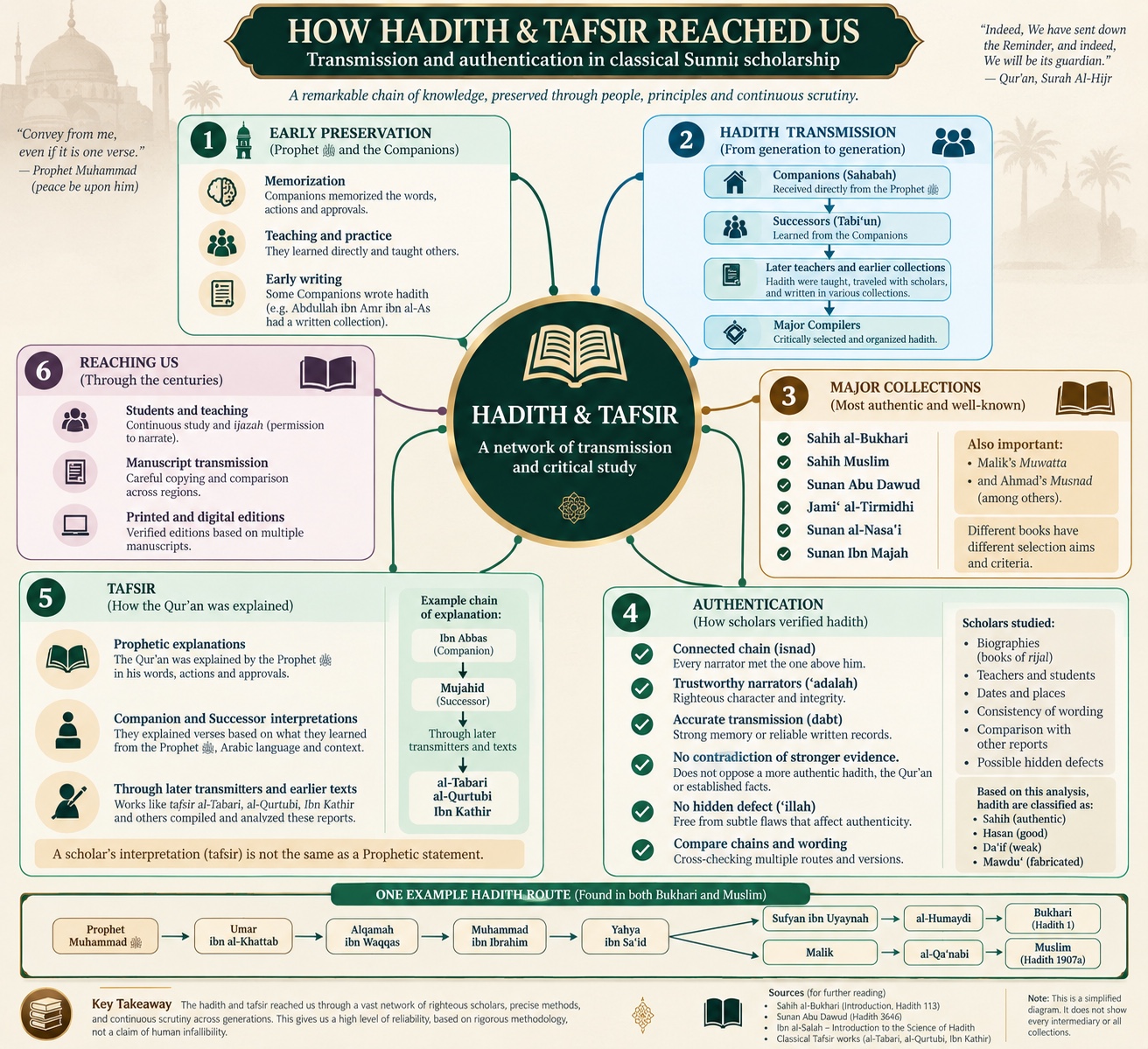
Abu Sa‘īd al-Khudri (may Allah be pleased with him) reported: The Messenger of Allah (may Allah's peace and blessings be upon him) said: "There should be no harm or reciprocal harm. Whoever causes harm, Allah harms him, and whoever makes things difficult, Allah makes things difficult for him."- Grade in the source
- Sahih/Authentic by virtue of other supportive narrations
- Reported by
- Narrated by Ad-Daaraqutni
- Source entry
- HadeethEnc · 4711 ↗
Original Arabic wording
عن أبي سعيد الخدري رضي الله عنه أن رسول الله صلى الله عليه وسلم قال: «لَا ضَرَرَ وَلَا ضِرَارَ، مَنْ ضَارَّ ضَرَّهُ اللَّهُ، وَمَنْ شَاقَّ شَقَّ اللَّهُ عَلَيْهِ».Understand this hadith
The Prophet (may Allah's peace and blessings be upon him) pointed out that we should avert harm from ourselves and others in all its kinds and manifestations. It is equally impermissible for anyone to harm himself or harm others. It is also not permissible to respond to harm with harm, for harm will not be removed with harm, except by way of legal retribution, without transgression. Then, the Prophet (may Allah's peace and blessings be upon him) warned that whoever harms people will be harmed, and whoever makes things hard for people will find hardship.
Lessons from the hadith
- It is prohibited to respond to harm with more than its equivalent.
- Allah did not enjoin upon His servants anything harmful to them.
- It is prohibited to cause or reciprocate harm with words, deeds, or lack of action.
- Recompense is of the same type as the deed. So, whoever causes harm, Allah harms him, and whoever makes things difficult, Allah makes things difficult for him.
- One of the Sha‘i rules is that "harm should be removed", for the Shariah disapproves of harming and condemns harming.
References (original Arabic)
سنن الدارقطني (4/ 51) (3079). التحفة الربانية في شرح الأربعين حديثًا النووية (ص74). شرح الأربعين النووية، لابن عثيمين (ص325). فتح القوي المتين في شرح الأربعين وتتمة الخمسين، للعباد (ص112).