Story chaptersSalih, Thamud and the sign of the she-camel
01Salih, Thamud and the sign of the she-camel
Salih reminded his people that Allah had made them successors to Ad and settled them in the land. They built on its plains and carved homes into mountains, enjoying skill, stability and apparent security.
Their buildings could not replace worship of Allah alone. Salih called them to worship Him and stop spreading corruption in the land.
He presented the she-camel as a sign from Allah and told them to let her graze on Allah’s earth without harming her. The Quran describes an explicit arrangement for water: a specified day for her and a specified day for them.
Calling her Allah’s she-camel is an expression of honour, not a claim that she was part of Allah. All creatures belong to Him; she was distinguished as a sign for Salih’s people.
The instruction was clear: respect the sign and observe the division of water. Arrogance made even this limit unacceptable to those seeking complete control.
An authentic report about Muhammad ﷺ passing through Al-Hijr identifies it as Thamud’s territory. Passing the dwellings of a punished people calls for reflection and humility, not heedless sightseeing.
02The killing of the she-camel and Thamud’s fate
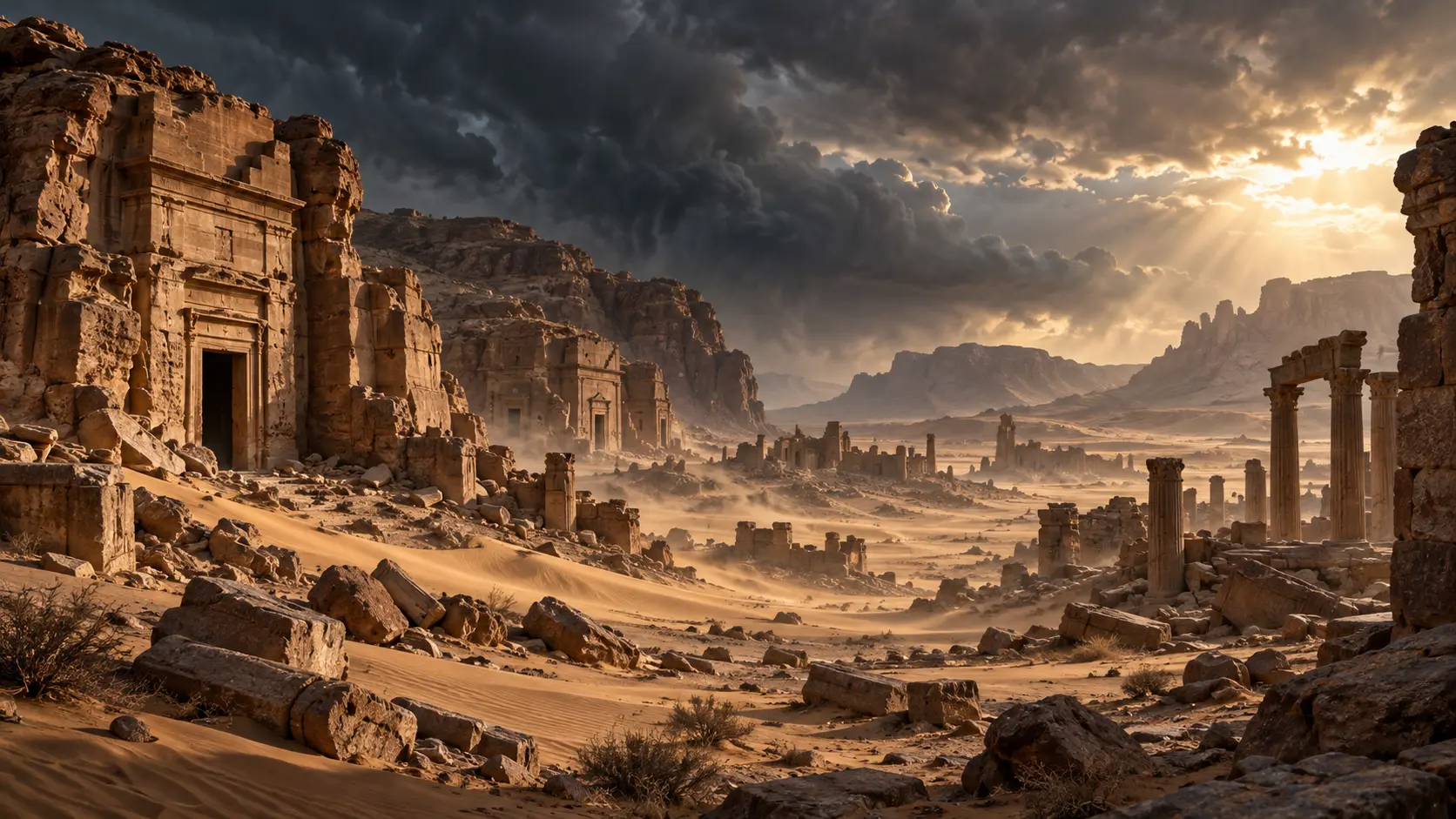
Surah Al-Qamar describes the direct perpetrator in the singular, while other passages attribute the deed to the people collectively. One carried it out, and the people approved and cooperated, so responsibility was attributed to them together.
Surah Ash-Shams calls the perpetrator the most wretched among them. His name and ancestry are not needed to understand the responsibility of the person who acted and the community that enabled him.
After the she-camel was killed, Salih gave his people three days in their homes before the promised punishment. We do not add tales about changing facial colours without sound evidence.
The punishment came. Different passages describe a terrible blast, a quake and a thunderous strike, leaving them lifeless in their homes. Allah saved Salih and the believers through His mercy.
When Muhammad ﷺ passed through Al-Hijr, he warned his companions against entering those dwellings except in a state of weeping and reflection, and he hastened through the valley.
Authentic reports also describe his instruction to pour away water and discard dough made with water from their wells, except the well the she-camel had used. A place of warning should not become an occasion for heedlessness.